SOUND
Wedding & Event Speaker Guide: Watts RMS, Woofer Sizes and Choosing the Right Setup
Speakers are undoubtedly a must for any party. Most of us have been to a venue or festival with great sound, where we felt the clarity of the tracks and the bass hugging us from every corner. We have also been to venues, usually bars, where we couldn't hear the song clearly even though the music was intensely loud, and our ears were ringing after we left. In this article we explain how speakers work, what separates a good speaker from a bad one, and how to choose the best setup for your needs.
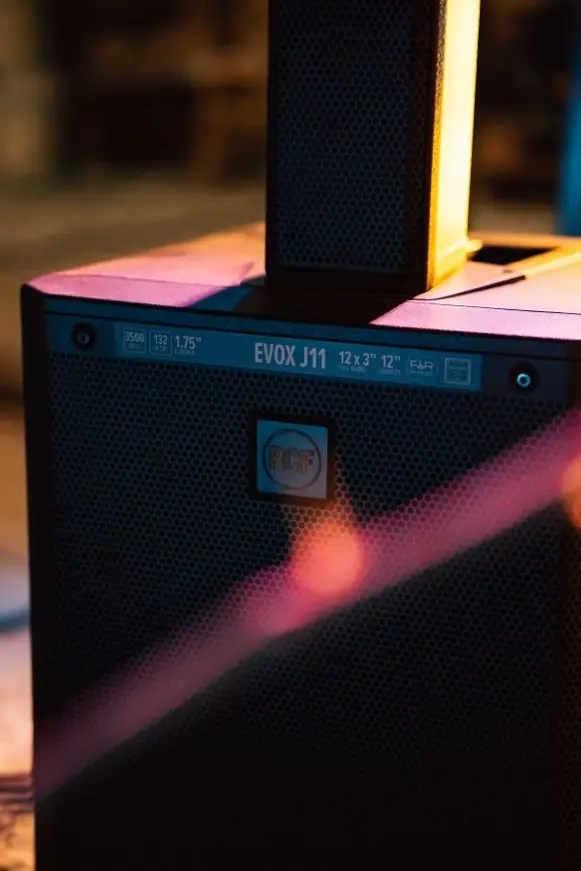
Starting with how they work: speakers take the electrical signal and turn it into sound, which is essentially changes in air pressure. The materials, the internal design of the cabinet, the amplifier, the converters and the drivers all contribute to the overall quality of the output. We won't go into all that here. Let's start with volume, which is closely related to power, or "Watts" as we call them. Watts measure the output level of a speaker: the higher the Watts, the greater the volume, though not necessarily the quality of the sound.
There is one important distinction here. Two kinds of Watts are advertised: Watts RMS and peak Watts. RMS is the real, continuous power of the speaker, while peak Watts is the power a speaker can reach for a fraction of a second. Unfortunately, many companies use the peak figure to advertise their speakers, so a speaker advertised as "2000W" may only be 700W RMS. Keep that in mind, and don't hesitate to ask your vendor for the real RMS figure.
Now to speaker size, and more precisely, woofer size. Ever noticed that moving a few metres away from a speaker drastically reduces the volume, while at some festivals the speakers are far away and the music still feels like it's pumping right next to you? Apart from power, one thing that contributes to this is the size of the woofer. The woofer is responsible for the low frequencies (bass), and these are the frequencies that travel furthest and pass through materials such as walls. That's why many venues with noise complaints ask for the bass to be lowered. A bigger woofer means fuller bass and sound that travels further. The most common sizes are 12”, 15” and 18”.
Finally, the type of system. At private events you will find:
- Speakers on tripods (the older setup): Often unstable and dangerous, especially with kids running around who may kick a tripod leg and bring the whole speaker down.
- Column speakers (the modern setup): Safe, aesthetically pleasing, with better dispersion technology and significantly clearer sound. This is the type of system we work with.
- Full subwoofer & tops setups: Needed only for big crowds. For most events they are unnecessary and more expensive, and they increase the risk of noise complaints, a big problem for many venues, while a good column system can comfortably cover events of up to 400 people.
To sum up, what you need to know about speakers is the brand and model (quality), the Watts RMS and woofer size (power and reach), and the type of system (tripod, column etc.). In our experience, a set of high-end column speakers with a 12” subwoofer covers 150 people outdoors and 200 indoors, and more sets can be added for bigger crowds. They provide more than enough power and excellent sound quality without distortion or ear fatigue. Message us to discuss what your event needs in terms of sound, without unnecessary extras and in the most cost-effective way possible.